What it's like working on an indie game for like 5 years
Frequently I'd reflect on the game's state, constantly thinking "I'm tired of working on this" and going over the laundry list of the same features and bug fixes that I had kept putting off, playing the game loop with the same testing setups that I can't debug into, meaning minutes of setup, sometimes falling apart due to a one in 10 bug or a one in 20 softlock that had been there for years. Sometimes I'd implement long overdue systems, fix longstanding bugs, or finally add a modicum of narrative writing or cut scenes that had existed in my head for years but were just now getting put into this thing, at 1/10th their impact. Finally checking in whatever I had and maybe crossing a thing or two off my list of features or subfeatures.

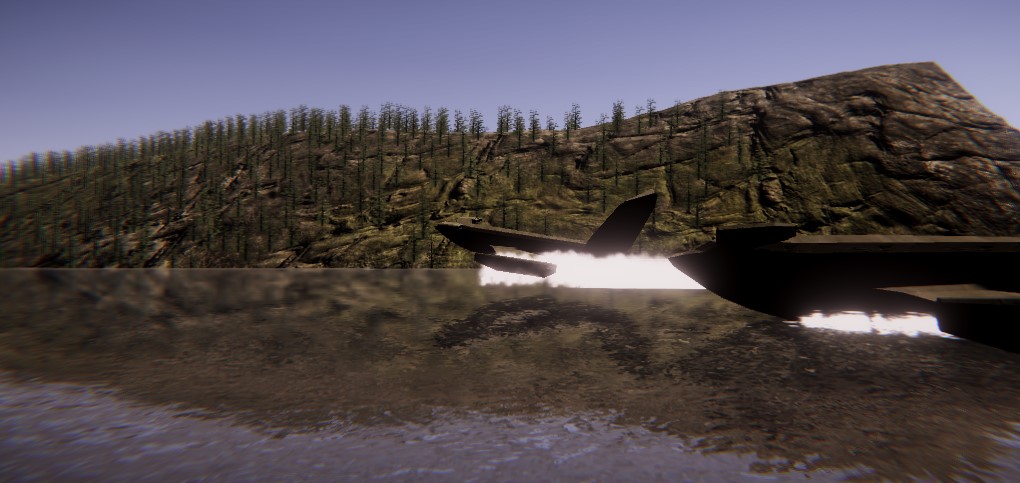
I started work on my game in 2016 after the death of David Bowie, based on an idea I had since about 2013 or earlier about a group of characters trapped in an industrial mining complex and having to survive a cave full of monsters while bringing enough ore back to the surface, where they would tell their personal stories and work together to escape. It combines procedurally generated levels, alongside a rudimentary sandbox game system based around a team of NPCs with different actions based on their equipped tools. I took a procedural cave generation tutorial and after building it out, adapted it to the systems my game needed to function. Eventually I built a game overworld, where the player and NPCs would occupy and advance in game days, and then go back into the cave. I built menu systems to support managing the game's limited resources and equip NPCs with tools, integrated a Node based dialog system, then created a system around it to support NPCs saying different things on different days, much like Animal Crossing. I built a save system. I worked on it on and off through several jobs, occasionally making some kinds of progress, at one point getting stuck on a bug for about 6 months and making zero progress on anything else.

It occupied a lot of my headspace for a very long time, every time I wanted to break off and do something else I'd feel guilty that I would be putting off The Game and further delaying it's release. I set myself a goal of releasing it by the end of 2019. Despite being unemployed, I didn't have the self esteem needed to really commit to it as a project, feeling too sheepish to submit it to indifferent publishers and get even more rejections alongside the rejections from an already year long job search. I had cut features and systems from it, reducing the game to just enough content to justify the central idea. I cut the number of NPCs from 24 to 10, and reduced the amount of dialog I had to write. Even with all these, systemic bugs still persisted.

Sometimes, though, the game would work, and it would work the way I had envisioned it, and I could see the outline of something big and meaningful, and it would feel like with just a few months of work and if I could fix all the bugs and get the core of the thing together, I could shove it onto itch.io for about $10 and go "aha, there".
I never crunched on the game. I had seen what the effects of chasing a game had done to people. Half decades of crunch, spent in squalid conditions, and even with a publisher deal and a console release still not being able to justify the time and effort spent. A Canadian developer, KO_OP, stated when it released it's game GNOG it did so with the expectation that it would sell exactly zero copies. While at first glance it may sound like a very pessimistic goal, it's actually a very healthy mindest to be in. The existence of the thing is enough, and widespread success is so rare to bet the farm on it will almost always lead to disaster.
Even so, i think the Indie Game Dream still bit me pretty hard. I think it affected my expectations and reasons behind making and finishing the game. I wanted the overwhelming success so that people would take me seriously as a creator. I wanted to pry open long-closed doors of success and opportunity. I think a lot of people want this, and unfortunately the game industry at large rarely rewards hard work. The market on Steam and Itch is abysmal, marketing campaigns are more work than the games themselves, and people are competing for an audience of indifferent or hostile gamers who are encouraged by a "consumer first" mindset.
With most of the game's systemic problems resolved, I could start working on a 3D art pass. For the first time it felt like a real game again, with the years old placeholder art being swept away piece by piece. I integrated music into it, and started thinking about finally finishing the game. It was something you could play start to "finish", with a hasty ending scene being integrated.
But then I started a month long job hunting blitz, rarely finding time for the game, and doing a phone screen or interview once every day. I would come back to the game after a rejection to remind myself I could still make and design games, and I had something in my control.
But then, I got a job offer, and suddenly the prospect of a "conflict of interest" came up. It was heartbreaking to think that after 4 years and a near completion, I would have to defer to my new benefactors before I could finish the game. A question I am still awaiting the answer to, but I have every indication I will be able to finish it.
But before all that, i had to put it away, and in the last few hours of work before I submitted a signed offer letter and then had to pause development, possibly indefinably, bugs started to pop up again. I cut features and turned off parts of the game I spent months on in order to just get the thing to work. I loosed a build and uploaded it somewhere, it didn't work, but it was there in some form. I tried to fix it up some more so it would at least be playable in some form, but in the vanishing hours and with the bugs getting more and more aggravating, I had to step away, possibly for good.
At the end of post mortems developers come away with some hard learned lessons. I don't know if I have any here. I tried to keep to the methodogy of Derek Yu (Cut features and ship games) while sticking with the game as long as I could to finish it. Indeed, finishing it became the goal moreso than working on something I wanted to work on. Finishing it meant that the games I wanted to work on would be finished, and I could take the lessons I learned and apply them to building a bigger game. Just the process of finishing would teach me a lot, and given how much the game is in there and how close I am to completing it, it didn't make sense to really abandon it for something else and start from scratch.
I get the sense that we want to optimize our time completely, never going down dead ends. Maybe that isn't possible. Maybe I should have quit the game and worked on what I really wanted to. I don't think it's really possible to say one way or another. I am glad I didn't overinvest in it, despite how much I liked the project, since it would have probably led to my ruin. It meant I could make the game with a lot less pressure to succeed and be a "real game".
I am not actually sure I have a conclusion to this, as the game's fate is still up in the air.
I have worked on a webcomic, on and off, for a little longer than I have the game. Going through stages where I'd produce a page or two a week and advance a long gestating story arc. As of now, the comic is in the same state as the game, indefinite hiatus. I stopped work on it due to the demands of the job search alongside development of the game.
My goals for the comic and the game were the same too, to make something and get attention. In years since while I haven't gotten a huge following, there's about 10 or so people in Seattle and beyond who really like it. Maybe that's all you can really hope for, and honestly, that's ok.
Comments
Post a Comment